Entity Consistency for AI Search: Why Inconsistent Signals Reduce Recommendation Confidence
AI systems build entity models from repeated signals across your site and the outside web. When those signals are inconsistent, AI systems lose confidence in recommending your brand. This guide explains how entity consistency works and how to maintain it.
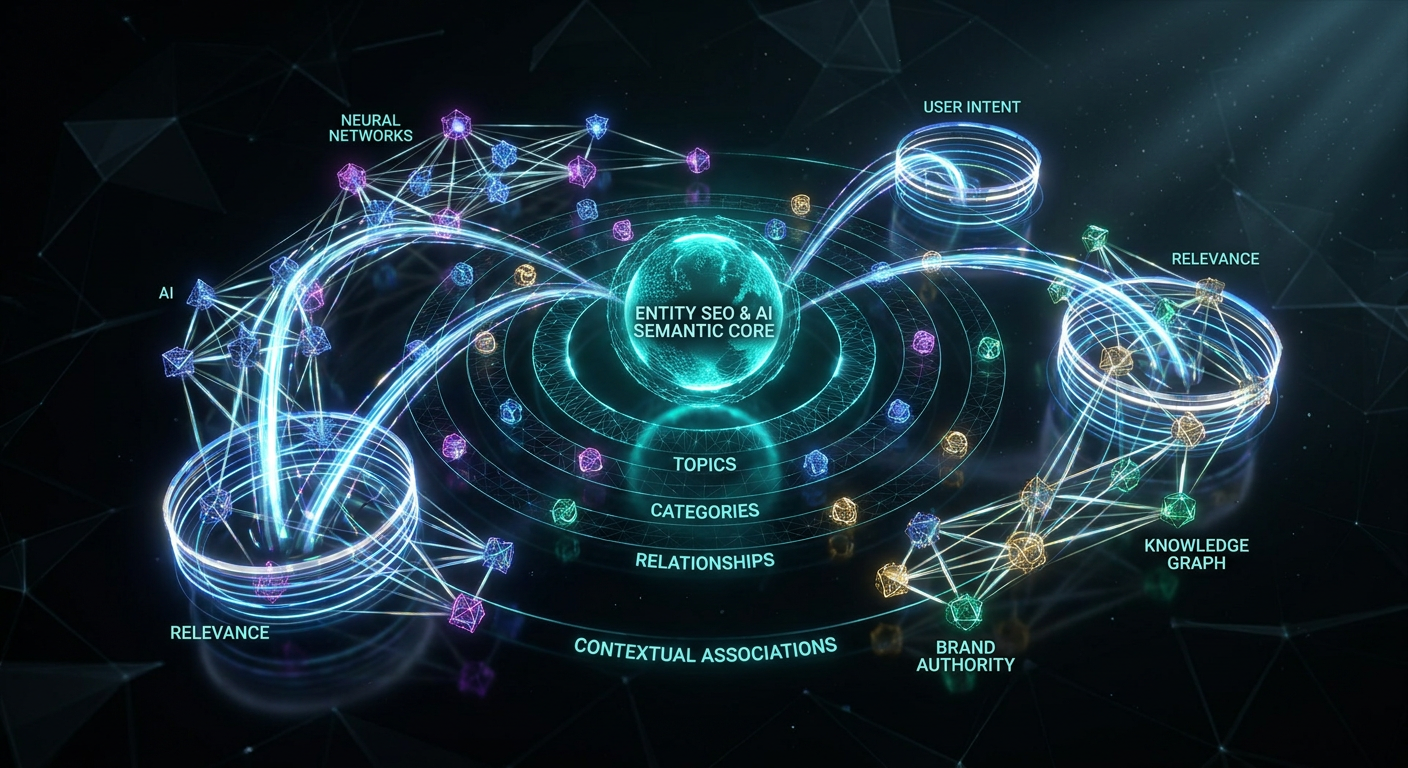
How AI systems build entity models
AI systems construct entity models by aggregating signals from multiple sources: your own site content, your structured data, and external sources that mention your brand. The goal is to resolve who or what your brand is, what category it belongs to, and whether it can be trusted.
This model is probabilistic. The more consistent the signals across all sources, the more confident the entity model. The more contradictory or absent the signals, the lower the confidence and the lower the recommendation probability.
What inconsistency costs you
Entity inconsistency is one of the most common and least obvious causes of low recommendation confidence. Sites regularly have different category terms across their homepage, About page, pricing page, LinkedIn profile, and external mentions without realizing the AI-layer cost.
When AI systems see your homepage call your product an "AI audit tool" and your schema say "visibility platform" and your LinkedIn say "SEO tool," they cannot build a confident entity model. The result is a lower probability of being surfaced for any of those category queries.
Entity ambiguity is not a fault. It is a fixable gap. Choose one canonical description and enforce it everywhere.
On-site entity consistency
- --Your Organization schema description should use the same core category term as your homepage hero.
- --Your About page should use the same product name and category as your homepage.
- --Your pricing page should describe what you are in a way consistent with how you are described elsewhere.
- --Meta descriptions across pages should not use different category terms for the same product.
- --Blog post introductions that reference your product should use your canonical description.
Off-site entity consistency
Off-site consistency is harder to control but equally important. Your LinkedIn company description, your Product Hunt tagline, your Crunchbase category, and any directory listings should all use the same core category language.
When you earn press mentions, the descriptions used in those mentions contribute to your entity model. Providing a consistent, clear one-line description in any outreach increases the probability that external mentions use your preferred category terms.
AudFlo checks entity consistency both on your site and in the external signals it can observe. The Authority Consensus audit surfaces specific inconsistencies and shows how to fix them.
Common questions
[ Free audit ]
See How Visible Your Site Is to AI Systems
AudFlo runs a 32-layer diagnostic across crawlability, structured data, entity signals, and authority. Free. No signup required.
Authority Consensus is whether trusted external sources consistently confirm what your site claims to be. This guide explains how AI systems use outside-web signals to validate brand identity and recommendation confidence.
Recommendation Readiness is whether an AI system has enough evidence to confidently recommend your brand, product, or site. This guide explains what it is, why it differs from visibility, and how to measure it.
Structured data is one of the highest-impact AEO signals. This guide covers which schema types AI systems use, how to implement them correctly, and the most common schema mistakes.
If AI systems can access your site but still do not recommend it, there are specific structural, authority, and content reasons why. This guide explains the most common causes and how to address each.