AI Visibility PlatformFor Startups
AudFlo is an AI visibility platform for startups. It helps founders audit AI visibility, recommendation readiness, and AI search discoverability across ChatGPT, Claude, Gemini, and Perplexity.
AudFlo helps AI systems identify your product category, understand your startup, and surface your brand with higher recommendation confidence.
What is actually happening
Why ChatGPT hesitates to recommend some startups.
Unclear positioning
ChatGPT cannot describe your startup in one confident sentence. It defaults to the competitor it can explain most clearly.
AI reads almost nothing
Many sites built with Bolt, Lovable, or modern frameworks show ChatGPT a blank page. Content loads too late for AI.
Weak trust signals
ChatGPT looks for outside confirmation. If competitors have reviews and directories and you do not, they feel safer.
Generic copy
"The smarter way to work" gives AI nothing to compare. Specific, categorizable startups get recommended far more often.
The pattern that gets startups recommended
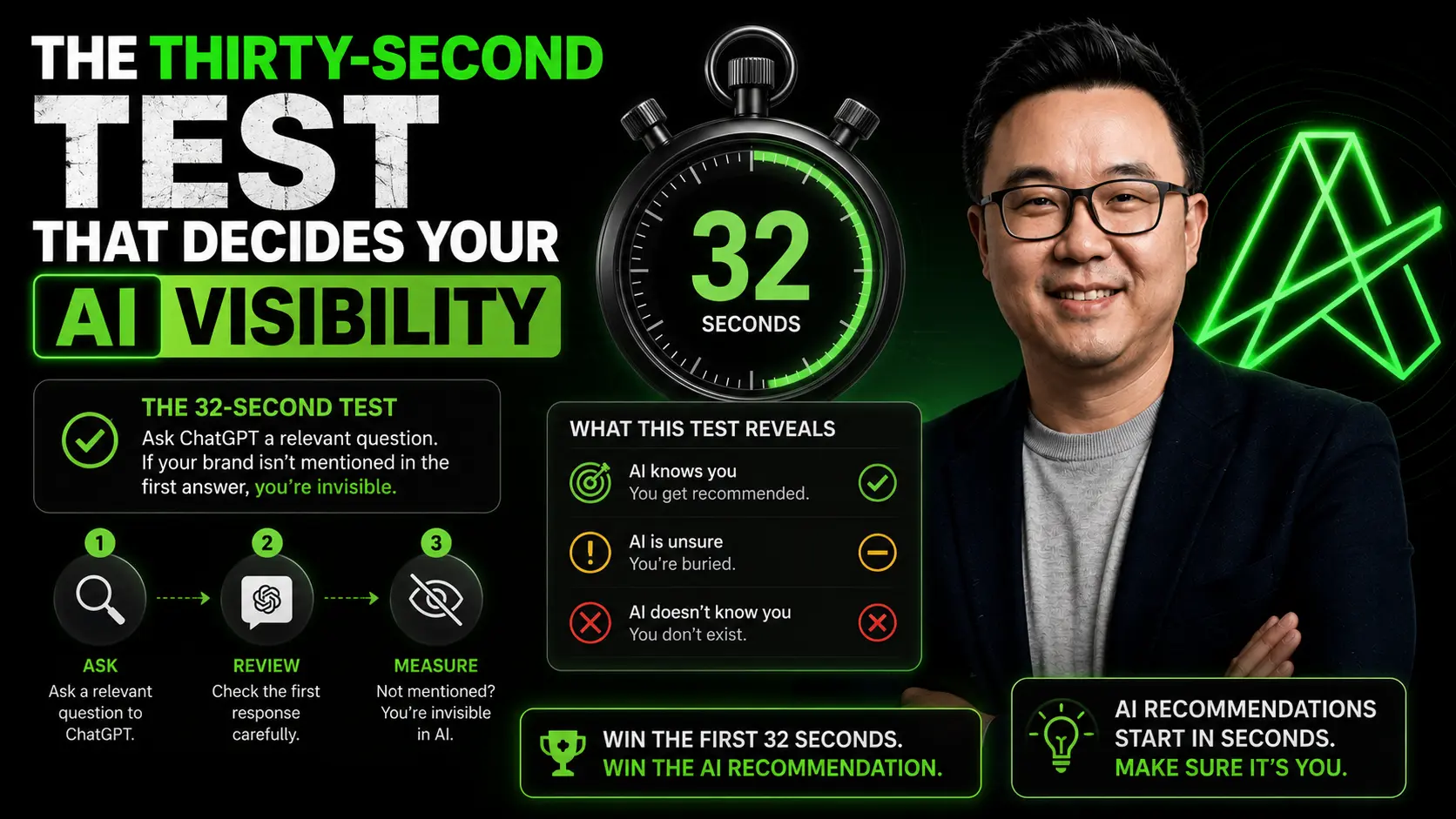
ChatGPT recommends startups it can confidently understand.
Not about which product is better. ChatGPT recommends the startup it can describe most clearly, verify most easily, and trust most quickly.
When ChatGPT, Claude, or Perplexity gets asked for a tool like yours, the winner is the startup with the clearest signals.
The real reason
Why ChatGPT recommends some startups and quietly skips yours.
When someone asks ChatGPT to recommend a tool like yours, your startup may not come up. Not because your product is not good enough. Because AI does not have what it needs to confidently recommend you yet.
ChatGPT, Claude, and Perplexity decide what to recommend based on what they can read, understand, and confirm. Most founders do not realize their startup is missing those signals.
Founder takeaway
Your startup is probably not being skipped because the product is not good enough. It is being skipped because ChatGPT does not have what it needs to confidently recommend you over a competitor who made it easy.
Your startup may look polished. ChatGPT may still see almost nothing.
Many modern sites load content through JavaScript. ChatGPT cannot wait for it. It sees a blank page and moves on.
Competitors with clearer positioning get recommended instead.
When ChatGPT cannot describe your startup in one confident sentence, it picks the competitor it can. Simple positioning wins by default.
ChatGPT prefers startups it can verify from multiple places.
AI trusts brands that appear consistently across the web. Reviews, directories, mentions. Your product quality is not the issue.
Broad messaging makes your startup hard for AI to compare.
Generic phrases give AI nothing to act on. Startups that are specific and categorizable get recommended far more in high-intent moments.
Built with AI. Still invisible to AI.
You shipped in days. ChatGPT still does not know what you do.
Bolt, Lovable, Cursor, and v0 make it possible to go from idea to product in days. But the same speed that gets you to launch also skips the signals that make ChatGPT feel confident recommending you.
AudFlo is the recommendation-readiness layer for AI-built startups.
You build. AudFlo checks whether ChatGPT can understand and confidently recommend it.
Bolt and Lovable launch beautifully. ChatGPT still has no clear picture.
The default copy and structure rarely give ChatGPT enough to describe what the startup does. The site looks polished. The AI signal is nearly empty.
The copy sounds confident but says nothing specific.
Polished AI-generated headlines feel great to humans. They give ChatGPT nothing to act on when someone asks to compare options in your category.
The signals ChatGPT relies on most are missing.
Clear category signals, direct Q&A content, and brand markup are easy to add but rarely part of a first AI-generated build.
There is no outside presence yet.
Without outside confirmation, ChatGPT treats the startup as unverified and recommends established alternatives even when yours is better.
Platform-specific recommendation readiness guides
What founders usually find
What founders usually discover during their first audit.
Many startup websites look polished to humans while still confusing ChatGPT, Claude, and AI search in important ways.
The most common finding
A polished homepage that reads great to humans but gives ChatGPT nothing to confidently describe, categorize, or recommend.
Why does ChatGPT misunderstand some startups?
ChatGPT relies heavily on homepage clarity, positioning consistency, and reinforcement signals. If your startup messaging is vague or inconsistent, ChatGPT may struggle to confidently explain or recommend it.
Can a beautiful website still confuse AI?
Yes. Many AI-generated websites look visually polished but still create recommendation problems because the positioning, structure, or category explanation is unclear. What looks clean to a human may look blank to ChatGPT.
Why does positioning affect AI recommendations?
ChatGPT needs to confidently understand what your startup actually does before recommending it in comparisons, summaries, or AI answers. Vague positioning forces it to pick a competitor it can describe more clearly.
What kinds of issues does AudFlo detect?
AudFlo identifies recommendation blockers such as unclear messaging, weak category clarity, homepage confusion, trust gaps, and implementation weaknesses that reduce how confidently ChatGPT, Claude, and Perplexity interpret your startup.
Do I need technical knowledge to use AudFlo?
No. AudFlo is designed for founders and vibe coders. Every problem is explained in plain English and comes with implementation-ready guidance you can paste directly into Bolt, Cursor, Lovable, or v0.
The core product moment
See where AI gets confused before your users do.
AudFlo highlights the issues that reduce how confidently ChatGPT, Claude, and Perplexity interpret your startup. Every gap comes with a ready-to-paste fix prompt.
Plain language, no jargon
Every gap is explained the way a founder thinks, not an engineer.
Fix prompt for every gap
Tailored to your startup. Paste into Bolt, Cursor, Lovable, or v0 and ship it today.
Re-run to track progress
Ship the fix, re-run your audit, see your recommendation confidence rise.
AI may misunderstand what your startup actually does.
Why: Homepage positioning is inconsistent across sections.
Fix: Clarify your category explanation at the top of the homepage.
Impact: Improves recommendation confidence and AI understanding.
Fix prompt ready
Add a brand clarity signal to your homepage with your name, category, description, and social links.
Expected improvement: +12 to +18 points
Every audit includes a ready-to-paste prompt for each gap.
What founders are finding
Founders are discovering why AI misunderstands their startups.
Many recommendation problems are invisible until founders see how ChatGPT, Claude, and Perplexity actually interpret their website.
Jay
EverList.dev
What they assumed
My homepage was clear enough.
What AI misunderstood
ChatGPT kept interpreting the product as a generic productivity tool instead of a recommendation readiness platform.
What AudFlo revealed
The homepage had no clear category signal. The hero copy used broad language that could describe dozens of different products.
What changed
Added explicit brand and category markup. ChatGPT started describing the product accurately in the same week.
Maya
LoopDesk
What they assumed
Consistent messaging was not something I needed to worry about.
What AI misunderstood
AI search was categorizing the product differently across different platforms and query types.
What AudFlo revealed
The product description on the homepage, the about page, and one directory listing were all significantly different.
What changed
Unified brand description across all channels in one session. AI category confidence improved noticeably.
Tom
Shipkiq
What they assumed
We had good SEO, so AI visibility would follow automatically.
What AI misunderstood
Perplexity and ChatGPT were not mentioning the product at all, even for queries where it was a direct fit.
What AudFlo revealed
The site was built with a JS-heavy framework. AudFlo showed that the HTML served to crawlers was nearly empty.
What changed
Implemented server-side rendering for key pages. Recommendation mentions started appearing within two weeks.
Progress over time
Recommendation confidence improves as your startup becomes easier for AI to understand.
Most founders re-audit after each meaningful change. Every iteration gives ChatGPT, Claude, and Perplexity more to work with.
Founders re-audit after:
Initial Audit
AI confusion detected. Recommendation blockers identified.
First run
Homepage Clarity
Positioning improved. ChatGPT can now describe your category.
After homepage update
Trust Reinforcement
Recommendation confidence increased. Consistent signals across platforms.
After trust signals
Recommendation Readiness
ChatGPT and Perplexity interpret the startup consistently. Mentions become measurable.
Ongoing improvement
Simple, honest pricing
Start free. Improve recommendation confidence when you are ready.
Most founders start with a readiness scan, then upgrade when they want implementation-ready reinforcement guidance and deeper recommendation intelligence.
Free
See where you stand and what to improve first.
Recommendation-readiness score
Top positioning gaps in plain language
What ChatGPT can and cannot understand about your site
Ready-to-paste fix prompt for each gap
No account required
Pro
Implementation-ready guidance to strengthen how ChatGPT recommends you.
Everything in Free
Implementation-ready reinforcement guidance
Reinforcement actions ranked by impact
Unlimited audits across any URL
Confidence tracking across runs
Founder-friendly explanations for every issue
The only question left
Does ChatGPT clearly understand your startup?
Analyze recommendation readiness and identify the gaps that may reduce how confidently ChatGPT, Claude, and Perplexity recommend your startup.