How AI Search Works: From Crawl to Citation
A complete technical explanation of how AI search systems like ChatGPT, Perplexity, and Google AI Overviews find, evaluate, and cite web content.
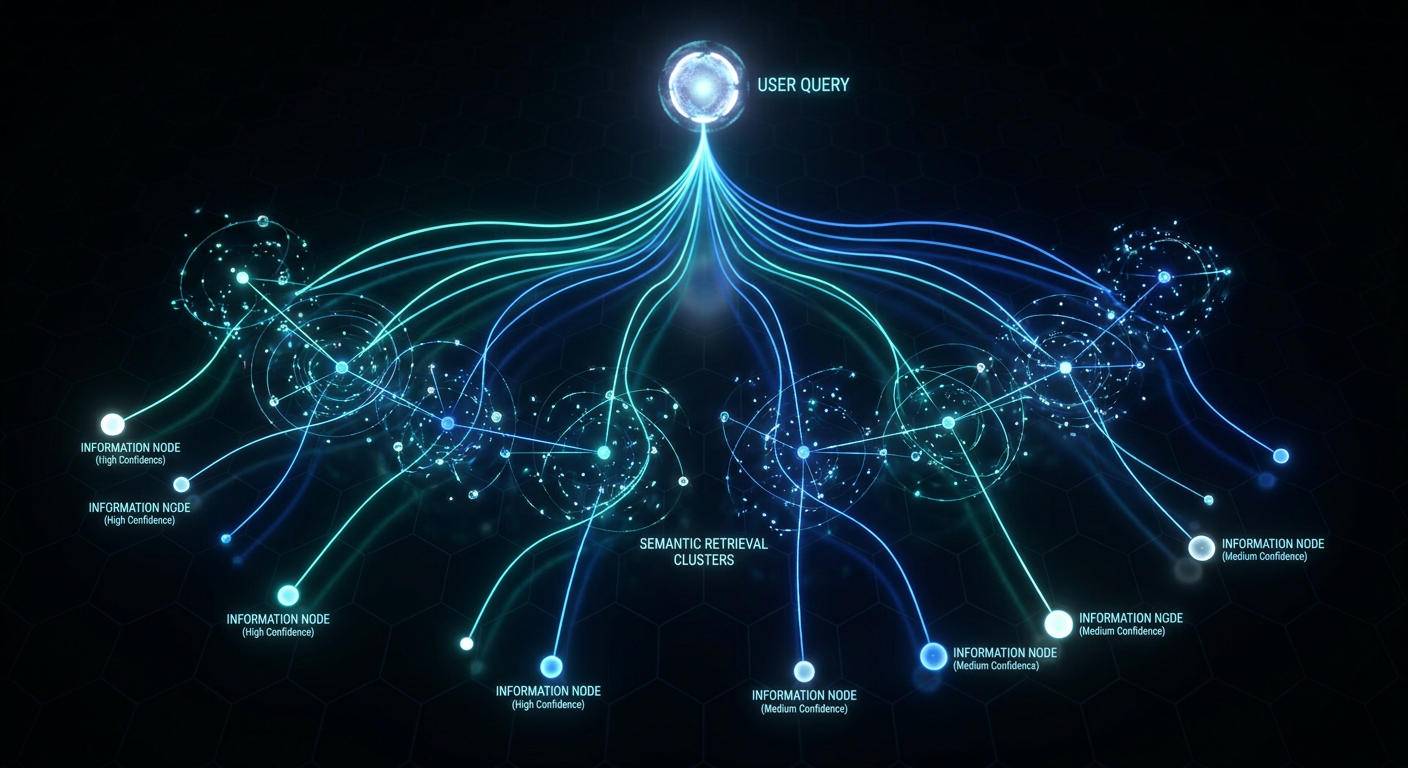
The AI search pipeline
AI search systems operate through a pipeline that is fundamentally different from traditional keyword search. Understanding this pipeline explains why the signals that matter for AI visibility are different from traditional SEO signals.
The pipeline has four stages: crawling and indexing, retrieval, ranking and selection, and answer generation with citation. Your site must pass all four stages to be cited in an AI-generated response.
Stage 1: Crawling and indexing
AI systems maintain their own crawlers that continuously fetch and index web content. OpenAI uses GPTBot. Anthropic uses ClaudeBot. Perplexity uses its own crawler. Google AI Overviews uses Googlebot with AI-specific processing.
At this stage, the critical factors are: robots.txt access, page crawlability, content availability in the raw HTML (not JavaScript-dependent), and sitemap completeness. A page blocked by robots.txt, returning errors, or rendered only in JavaScript will not enter the index.
Stage 2: Retrieval
When a user submits a query, the AI system retrieves candidate documents from its index using semantic search. Unlike keyword matching, semantic retrieval finds documents that are topically relevant to the query intent, not just those that contain the exact keywords.
This stage benefits from clear entity definitions, topic authority, and content that explicitly addresses the query type. A page that defines a term clearly and completely is more likely to be retrieved for queries about that term than a page that mentions it briefly.
Stage 3: Ranking and selection
From the retrieved candidates, the AI system selects the sources it will use to generate the answer. This selection weighs multiple factors simultaneously: domain authority, content quality, structured data signals, answer format, freshness, and relevance to the specific query.
Structured data plays a critical role here. FAQPage schema directly signals which content is intended to answer questions. Organization schema establishes the credibility of the source. Article schema provides freshness and authorship signals.
Stage 4: Answer generation and citation
The AI system generates a synthesized response using the selected source documents as context (this is called Retrieval Augmented Generation, or RAG). It then attributes the response to the sources, producing the citation links that appear alongside AI-generated answers.
The final selection of which source gets cited in the displayed answer depends on how directly the source content addresses the specific question. Content in FAQ format, with direct answer sentences and structured schema, is more extractable and more likely to be cited.
What RAG means for site optimization
Retrieval Augmented Generation is the technical process behind AI search. The AI model does not answer from memory alone. It retrieves relevant documents and uses them as context when generating a response. The cited sources are the documents it retrieved.
Understanding RAG reframes AEO strategy: your goal is not to write content that ranks for a keyword, but to write content that serves as the best possible context document for a specific query. Direct answers, clear structure, and authoritative content that addresses a query completely are what makes a source useful to a RAG system.
How the major platforms differ
| Platform | Retrieval mode | Citation style | Key optimization signals |
|---|---|---|---|
| ChatGPT (base) | Training data | Inline attribution | Training-time indexation, authority |
| ChatGPT Browse | Real-time web | Cited links | Crawlability, structured data, freshness |
| Perplexity | Real-time web (all queries) | Cited sources panel | Crawlability, FAQPage schema, authority |
| Google AI Overviews | Google index + real-time | Source cards | All Google signals + structured data |
| Claude.ai | Training data + optional web | Inline attribution | Training-time authority, entity clarity |
Common questions
[ From the Blog ]
Explore related articles
[ Free audit ]
See How Visible Your Site Is to AI Systems
AudFlo runs a 32-layer diagnostic across crawlability, structured data, entity signals, and authority. Free. No signup required.
A complete explanation of Answer Engine Optimization: what it is, why it matters in 2025, and how it differs from traditional SEO for AI-powered search systems.
A practical, step-by-step guide to increasing the probability of your website being cited by ChatGPT, Perplexity, Google AI Overviews, and other AI answer systems.
A direct explanation of why ChatGPT, Perplexity, and other AI answer systems do not cite or mention your website, with specific technical causes and how to fix each one.
A detailed comparison of Search Engine Optimization and Answer Engine Optimization. Understand the different signals, goals, and optimization strategies for each system.