AI Search Platforms
Deep dives into specific AI search platforms: ChatGPT search, Perplexity, Google AI Overviews, Bing Copilot, and how each differs in citation behavior.
AI search platforms are the consumer-facing products through which users interact with AI-powered search: ChatGPT Search, Perplexity, Google AI Overviews, Bing Copilot, and others. Each platform has distinct retrieval architecture, citation behavior, and optimization requirements.

AI Search Platforms Explained: ChatGPT vs Google vs Perplexity
AI search is not one ecosystem. ChatGPT, Google AI Overviews, Perplexity, Gemini, and AI Mode all retrieve and cite content differently. Understanding each platform is foundational to modern AEO strategy.

How ChatGPT Retrieves Information And Cites Websites
Most people think ChatGPT simply knows information. The reality is more complex. Understanding how ChatGPT combines training data with real-time retrieval systems is foundational to building AI visibility that actually works.
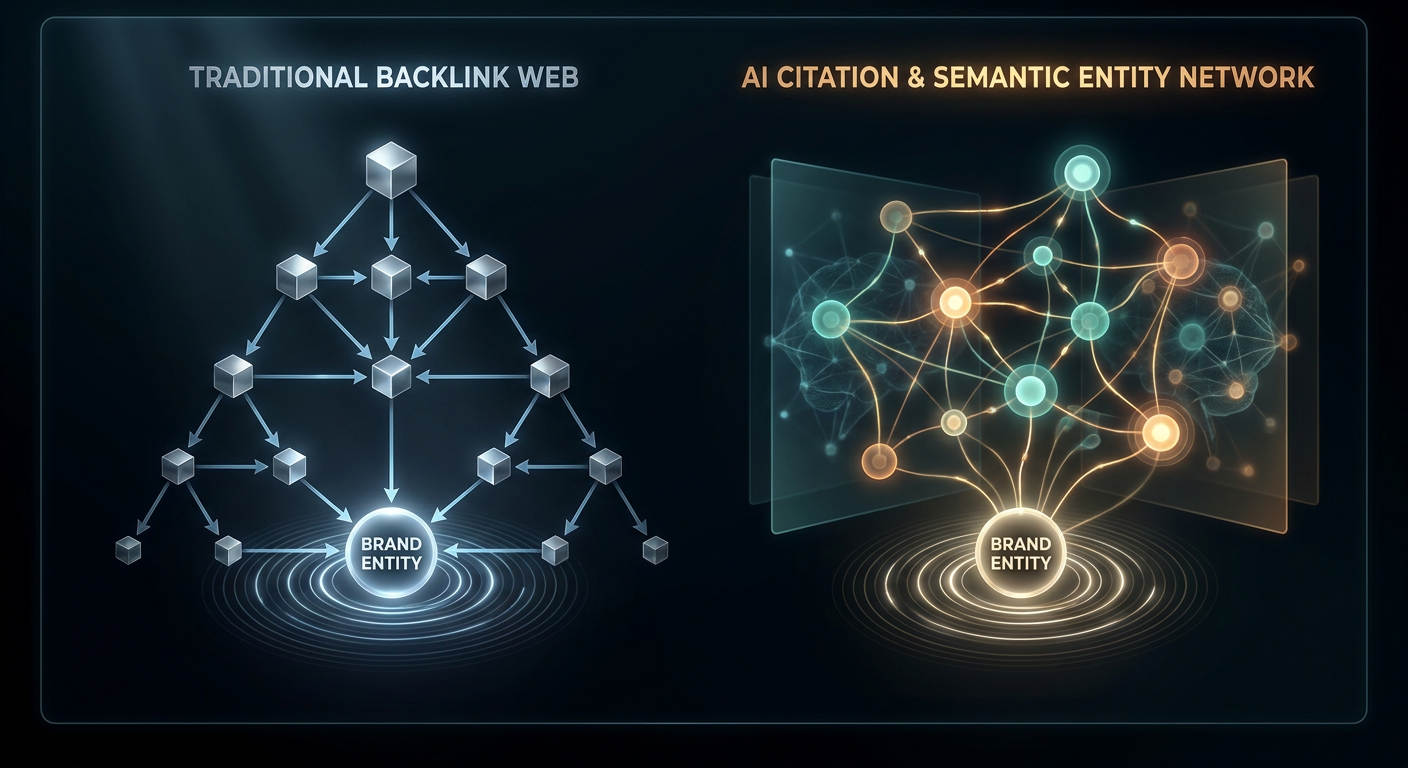
AI Citations vs Backlinks: What Actually Drives AI Visibility?
Backlinks dominated SEO for decades. AI search is introducing a different model where mentions, semantic associations, and entity reinforcement increasingly shape which brands get retrieved and cited. Here is what founders need to understand.
ChatGPT Search uses Bing indexing combined with OpenAI retrieval logic. It weights structured data heavily and tends to cite pages with clear entity authority. Optimization for ChatGPT Search overlaps significantly with general AEO practices: valid schema, server-rendered HTML, explicit answer statements, and clear entity associations.
Perplexity uses its own crawler (PerplexityBot) and retrieval stack. It is known for citing highly factual, densely written content. Academic-style writing with clear source attribution within the content tends to perform well. Perplexity also surfaces real-time web results, making it important for content that is frequently updated or covers time-sensitive topics.
Google AI Overviews draws primarily from Google search index and tends to favor pages that already rank well in traditional Google search. However, structured data, FAQ sections, and entity clarity independently improve AI Overviews inclusion probability even for pages not ranking in top positions. Google AI Overviews optimization is the intersection of traditional SEO and AEO.
Common questions
How does ChatGPT Search work?
ChatGPT Search retrieves real-time web content using Bing indexing supplemented by OpenAI retrieval logic. It generates answers attributed to source pages with clickable citations. Optimization for ChatGPT Search requires allowing GPTBot access, valid structured data, server-rendered HTML, and clear entity authority signals.
How does Perplexity decide what to cite?
Perplexity uses PerplexityBot to crawl and index content, then uses its own retrieval system to select citations. It favors content with high factual density, explicit source-like formatting, server-rendered HTML, and strong topical authority. Blocking PerplexityBot in robots.txt will prevent your content from appearing in Perplexity results.
Does Google AI Overviews use the same index as Google Search?
Google AI Overviews draws primarily from the Google Search index. Pages that rank well in Google have higher probability of inclusion in AI Overviews, but ranking alone does not guarantee inclusion. Structured data completeness, FAQ sections, and entity clarity are additional factors that independently improve AI Overviews citation probability.
Should I optimize differently for each AI search platform?
The core AEO practices (valid schema, server-rendered HTML, entity clarity, answer formatting) benefit all AI search platforms simultaneously. Platform-specific optimizations are secondary: ensuring PerplexityBot is allowed for Perplexity, optimizing traditional Google signals for AI Overviews, and building topical authority for ChatGPT Search. Start with universal AEO before platform-specific tuning.
Related resources