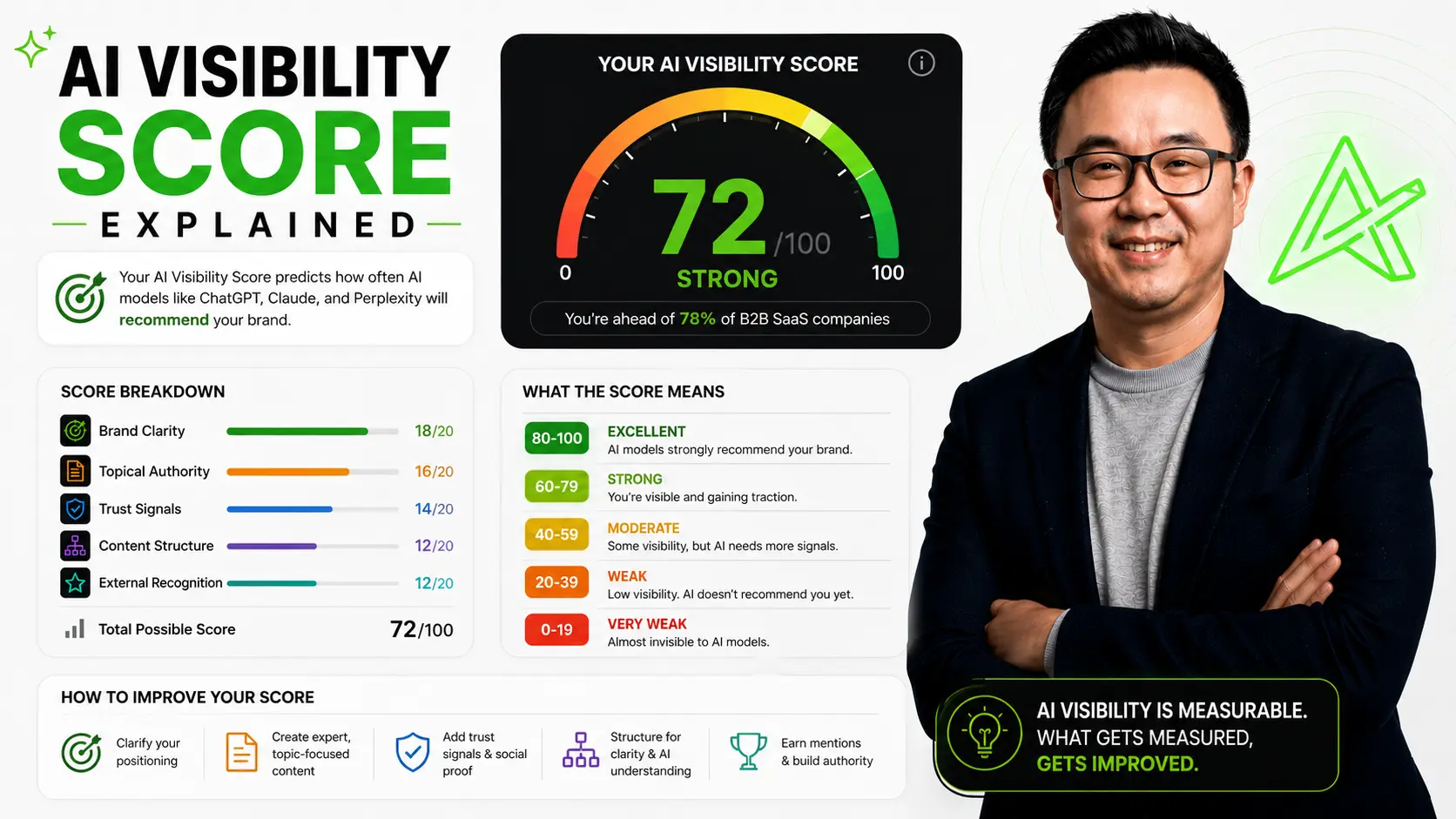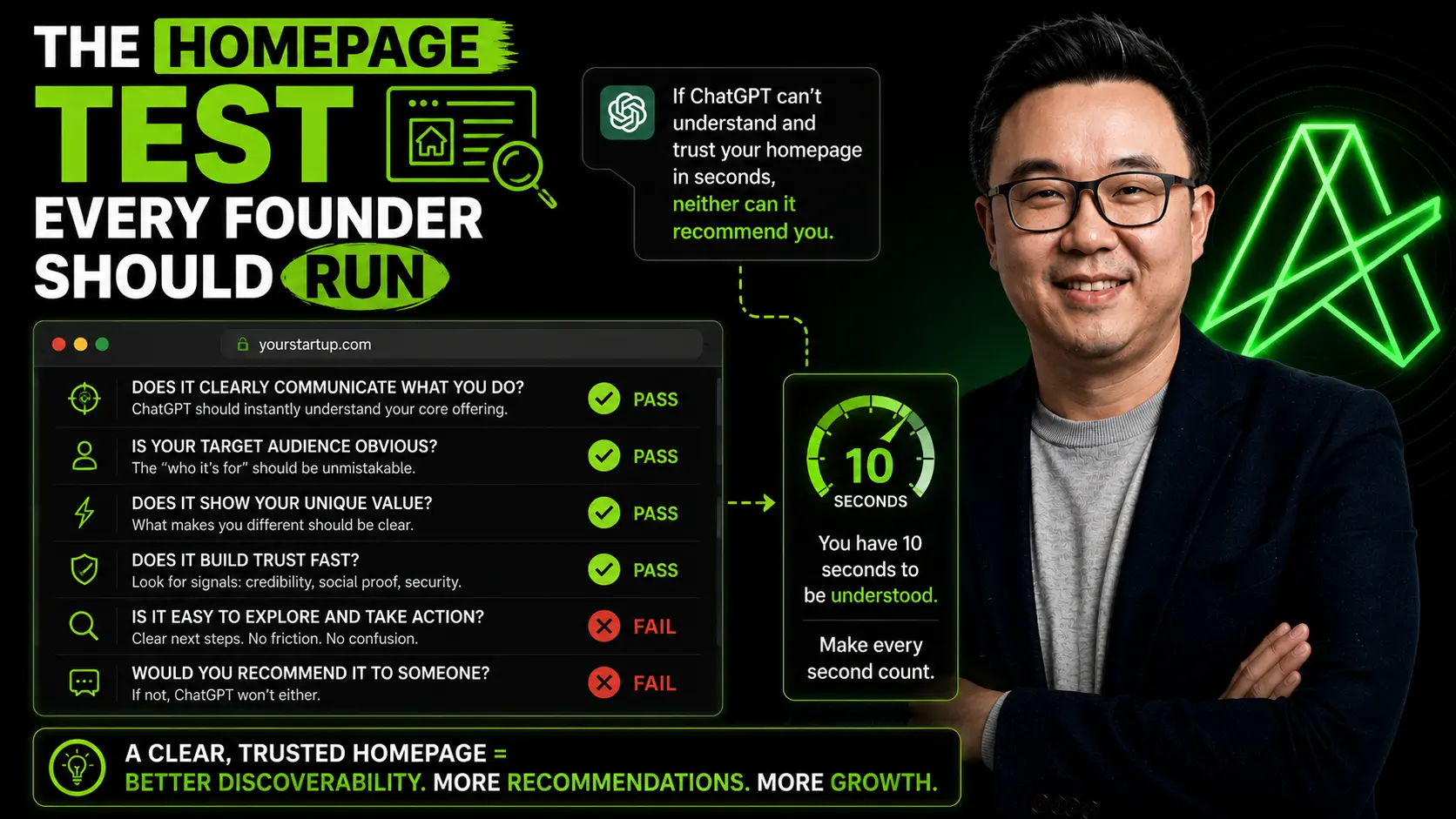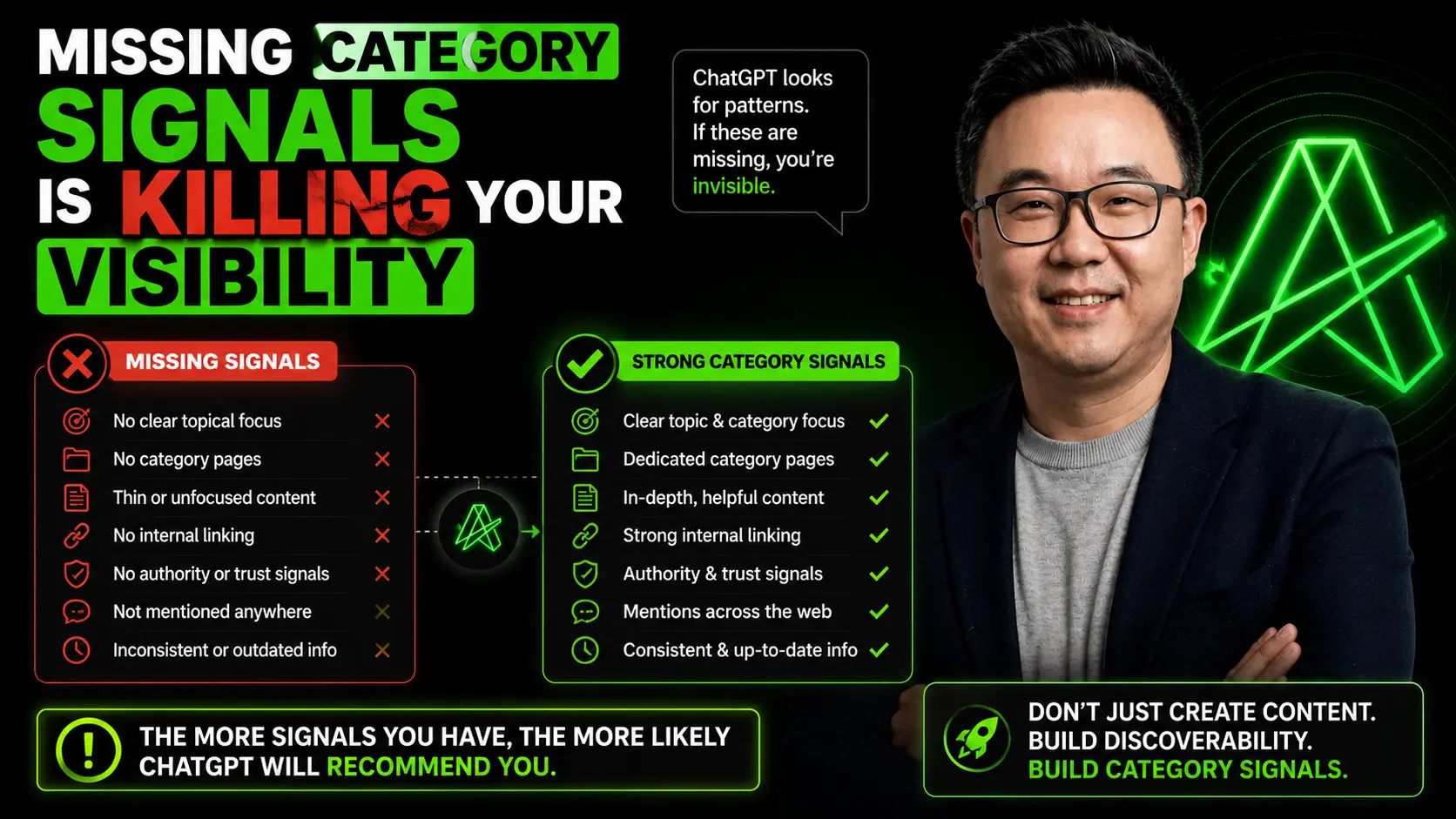
Most founders discover the AI visibility problem the same way. Someone on the team asks an AI system for a tool recommendation in your exact category, and your brand is not in the response. Or it appears third in a list where you expected to be first. Or it appears on Perplexity but never on ChatGPT. Or it appeared last month but stopped appearing after a competitor published new content. Each of these experiences points to the same underlying problem: you have no systematic way to observe what AI search systems are doing with your brand. This article covers the practical mechanics of how to track brand mentions in AI search, what an actual monitoring workflow looks like, and what the signal tells you once you have it. If you are starting from scratch on the topic, the previous article on whether tracking AI brand mentions is actually possible covers the structural constraints first. This article moves past the question of feasibility into the question of method.

What this article is

This is article three in a connected series on AI brand mention monitoring. It covers practical tracking methodology, signal interpretation, workflow construction, and the specific mistakes that produce misleading data. It deliberately avoids repeating the conceptual foundation covered in earlier articles and goes directly into operational detail.

Why AI Visibility Tracking Became Necessary

For most of the last decade, visibility meant ranking. Your position in Google search results was the primary signal for whether potential customers could find you. It was measurable, comparable, and stable enough to track with widely available tools.

AI search does not produce rankings. It produces synthesized responses. When a user asks an AI system which tools to use, which services to hire, or which platform to trust, the AI generates a recommendation from its accumulated signals about the entities in that space. Your brand either appears in that response or it does not. There is no position three to optimize toward.

The commercial stakes of that shift are real. AI-generated recommendations carry implicit trust. A user who receives a product recommendation from an AI is more primed to act on it than a user who clicks a search result link. The conversion weight of an AI mention is higher than a traditional organic click, which means missing from AI responses has a compounding cost that grows as AI search usage grows.

Tracking became necessary because the visibility channel became significant. Not tracking it is not a neutral choice. It is choosing to operate blind in an increasingly important distribution layer.

Why Traditional SEO Tracking No Longer Tells the Full Story

Google Search Console, rank trackers, and organic traffic dashboards tell you about one search surface. They are accurate and useful for what they measure. The problem is that they measure a surface that is decreasing in relative importance as AI-mediated responses displace traditional blue-link results for high-intent queries.

Search console does not tell you whether your brand appeared in an AI Overview. It does not tell you whether ChatGPT mentioned you in response to a category recommendation query. It cannot show you whether Perplexity cited your content or cited a competitor instead.

A brand can show flat or declining organic traffic while AI-driven recommendation exposure is growing significantly, and none of the traditional tracking tools would surface that. Conversely, a brand can maintain strong traditional rankings while being invisible across AI recommendation surfaces, and the traditional dashboard would show green metrics while a real distribution gap goes undetected.

The dashboard blind spot

If your tracking infrastructure only covers traditional search, you are making product, content, and positioning decisions with a partial signal set. The AI visibility layer is not captured by any existing analytics integration. It requires a separate, purpose-built monitoring approach.

What Makes AI Search Visibility Difficult to Measure

Three structural characteristics of AI search make it fundamentally harder to measure than traditional search.

Probabilistic output means the same query run twice may produce different results. AI language models sample from probability distributions when generating responses. There is no cached, deterministic answer waiting to be retrieved. Every response is generated fresh, which means variation is built into the system.

Query expansion compounds the measurement challenge. AI systems often decompose user prompts into multiple sub-queries before synthesizing a response. This is the query fan-out mechanism that makes topical coverage so important. It also means the same surface-level prompt can produce very different brand mention outcomes depending on how the AI chose to expand it in a given run.

Platform fragmentation means your visibility on one AI system does not predict your visibility on others. ChatGPT, Perplexity, Google AI Overviews, and Gemini each have different retrieval architectures, different training data compositions, and different source weighting systems. A brand that is prominent on one platform may be absent on another for reasons that have nothing to do with the quality of their content.

How AI Systems Decide Which Brands to Mention

Understanding the decision process is what makes tracking actionable rather than just observational.

AI systems build entity associations over time through repeated co-occurrence patterns in indexed content. When your brand name consistently appears alongside your category terms across many indexed sources, AI systems build a high-confidence association. That association is what gets activated when a relevant query is processed.

Beyond entity association, AI systems evaluate authority consensus: whether external sources corroborate the claims your own site makes about your brand. A brand that calls itself an AI visibility platform but has no external sources using that language creates a consensus gap that reduces recommendation confidence.

For retrieval-augmented systems, content extractability matters directly. When the AI retrieves documents at query time, it evaluates whether those documents contain clear, standalone answer material that can be incorporated into a response. Pages with ambiguous structure, buried answers, or content that only makes sense in context are less likely to be cited.

The three-layer decision

AI brand mentions are decided by entity association strength (does the AI confidently know what you are?), authority consensus (do external sources agree?), and content extractability (can the AI actually use your content in a response?). Tracking tells you the outcome. Diagnosing which layer is causing gaps tells you what to fix.

Why AI Visibility Changes Constantly

If you tracked your brand appearances last month and do not track them this month, your data is already partially stale. AI visibility is not a fixed state.

Model updates change which entity associations are activated for which queries. Index updates change which content is retrieved by retrieval-augmented systems. A competitor publishing a strong piece of content in your category can shift their retrieval probability upward, which in a competitive response context may shift yours downward.

New content you publish gets indexed and can begin appearing in AI retrieval contexts relatively quickly, especially on platforms like Perplexity that run real-time web searches at query time. This means positive changes you make can show up in monitoring data within weeks, not months.

The instability that makes tracking challenging is also what makes consistent tracking valuable. A brand that is monitoring regularly can detect both positive shifts and negative ones quickly enough to respond. A brand that checks quarterly is making decisions on data that may no longer reflect current AI system behavior.

The Difference Between Rankings, Mentions, Citations, and Recommendations

These terms are used loosely in most discussions of AI search visibility, but they describe meaningfully different things. Conflating them produces confused strategy.

A ranking is a positional assignment in a list. Traditional search produces rankings. AI search does not, with minor exceptions like certain structured AI result features. Optimizing for AI rankings is largely a category error.

A mention is your brand name appearing in an AI-generated response. This is the broadest and most common form of AI brand presence. It includes cases where your brand is named but no link is provided, which describes the majority of ChatGPT responses that reference brands.

A citation is a formal reference to a specific source, typically with a link. Perplexity provides citations. Google AI Overviews sometimes do. Citations are trackable through different mechanisms than unlinked mentions, and they carry different signals about your content.

A recommendation is the highest-value form of AI brand presence: an AI actively suggesting your brand as a solution to a user need. Recommendations imply decision context and carry higher conversion weight than incidental mentions. A brand mentioned in passing is very different from a brand actively recommended as the right tool for a specific user situation.

AI Brand Presence Types and What to Track

TypeExampleTracking MethodCommercial Weight
RankingPosition in a structured AI list resultLimited applicability in most AI responsesLow
MentionBrand named in response without linkQuery sampling and response reviewMedium
CitationSource link in Perplexity or AI OverviewsDirect platform observation + source trackingHigh
RecommendationAI actively suggests your brand as solutionQuery sampling with intent-matched promptsHighest

How AI Platforms Retrieve Information Differently

The retrieval mechanism behind each platform shapes what you observe in monitoring data and what actions will improve your visibility on that platform.

ChatGPT without web search draws on training data. Entity associations encoded during model training determine which brands appear in responses. These associations update with model releases, not in real time. If your brand became visible after a model knowledge cutoff, it will not appear in training-data responses until the next model update.

ChatGPT with web search uses Bing-indexed content to augment responses. Your brand can appear in these responses if your content is indexed, structured clearly, and matches the retrieval context of the query. This channel is more responsive to recent content changes than training-data responses.

Perplexity runs a live web search for every query and cites its sources directly. It is the most transparent platform for understanding why a specific source was or was not used. Monitoring Perplexity citations gives you direct signal about content extractability and indexed authority.

Google AI Overviews pulls from the Google Knowledge Graph alongside indexed web content. Brands with strong E-E-A-T signals, established entity definitions, and consistent structured data have a higher baseline for appearing in AI Overviews. The bar for newer brands is higher here than on Perplexity.

Rank trackers are engineering solutions to a data retrieval problem. They check whether a URL appears at a specific position in search results for a given keyword. That architecture assumes a ranked list exists and a position can be assigned. Neither assumption holds for AI-generated responses.

Some tools have adapted by checking whether your domain is cited as a source in AI Overviews or Perplexity responses. This is useful but narrow. It captures citation behavior while missing the much larger landscape of brand mentions in conversational responses that do not include links.

No existing rank tracker was built to answer the question: "What percentage of the time does my brand appear in AI responses to recommendation queries in my category?" That question requires a different type of tool, running a different type of process, against a different type of data source.

Using a rank tracker to assess AI visibility is not just incomplete. It can actively mislead. A brand that ranks well for target keywords may have strong traditional SEO scores in the tool while being largely absent from AI recommendation responses. The data looks positive while a real gap grows.

The rank tracker trap

Green metrics in a rank tracker are not evidence of AI visibility. They are evidence of traditional search visibility. These are increasingly separate things as more search activity shifts to AI-generated responses. Building AI visibility strategy on top of rank tracker data is building on the wrong foundation.

What an AI Visibility Platform Should Actually Monitor

A purpose-built AI visibility platform monitors a different set of signals than traditional search tools. Understanding what should be in scope is the prerequisite for evaluating whether any given tool is actually measuring what matters.

Brand mention rate across query categories is the primary metric: what percentage of sampled recommendation queries result in your brand being named. This is the AI visibility equivalent of organic search share of voice.

Recommendation position within responses matters because AI responses are not created equal. A brand that consistently appears first in a list of recommendations occupies structurally different territory than a brand mentioned as an afterthought in the final sentence.

Citation presence and source attribution on retrieval-augmented platforms tells you about content-level quality. If Perplexity is not citing your content for queries where you should be relevant, the issue is likely in content structure, extraction clarity, or indexed authority.

Competitive co-occurrence shows which brands appear alongside yours, which brands appear instead of yours, and what the consistent competitive set looks like across your query landscape. This competitive context is often more strategically useful than absolute visibility metrics.

Query category coverage shows which types of prompts your brand appears in and which it does not. A brand that appears consistently in how-it-works queries but never in comparison queries or recommendation queries has a specific content and entity gap that the monitoring data can identify.

What a real AI visibility platform monitors

  • Brand mention rate across representative recommendation query sets
  • Recommendation position within AI responses
  • Citation presence and source attribution on Perplexity and AI Overviews
  • Competitive co-occurrence: who appears alongside and instead of your brand
  • Query category coverage: which intent types trigger your brand
  • Cross-platform consistency: whether visibility patterns differ by platform
  • Temporal trend data: whether mention rates are improving, declining, or stable
  • Signal gap diagnostics: which AI visibility signals are causing observed gaps

The Most Important AI Visibility Signals

The AI search ranking factors guide covers all of this in depth. For monitoring purposes, the signals worth watching most closely are the ones most directly connected to mention rate changes.

Entity association consistency is the degree to which your brand name and category phrase appear together across indexed web content. Changes here drive changes in training-data-based mention rates, though the lag is longer.

Content freshness on core pages affects retrieval-augmented mention rates. A page that was last updated eighteen months ago is competing against fresher content from competitors who are publishing regularly. Perplexity and web-search-augmented ChatGPT both favor recently updated, clearly structured content.

Schema markup completeness is a direct signal to AI systems about what your product is and who it serves. Incomplete or absent Organization and SoftwareApplication schema means AI systems have to infer your entity definition from surrounding content rather than reading it directly. Inference is less reliable.

External reinforcement velocity refers to the rate at which new indexed sources are adopting your category language in association with your brand name. This is the signal that compounds most reliably over time and the one that is most difficult to reverse if a competitor establishes it first.

How to Track Brand Mentions in AI Search Strategically

Strategic tracking means building a method that produces consistent, comparable data over time rather than ad hoc observations that cannot be interpreted as trends.

Define Your Query Universe

Your query universe is the set of prompts that represent the range of questions your potential customers are asking AI systems before they make purchasing decisions in your category.

Organize these into three intent categories. Category recommendation queries are prompts like "what are the best AI visibility tools for founders" or "top platforms for tracking AI search presence." Problem-solution queries frame the need directly: "how do I know if ChatGPT is recommending my product" or "how can I see if my brand appears in AI search results." Comparison queries create explicit competitive framing: "alternatives to [competitor]" or "[category] tool comparison for SaaS founders."

Write five to eight distinct prompt variations for each intent category. Variation in phrasing is essential because AI responses are sensitive to prompt framing. A query set that only tests one phrasing per intent is undersampling the actual distribution of how users ask these questions.

Establish a Platform Coverage Plan

You cannot track everything on every platform with manual effort. Prioritize based on where your target audience actually uses AI search. For most B2B SaaS products, ChatGPT category recommendations and Perplexity source citations are the highest-priority surfaces. Google AI Overviews matter if informational queries drive significant top-of-funnel traffic in your category.

Run your full query set on each prioritized platform separately. Responses differ enough across platforms that combining them would obscure platform-specific patterns. Track each platform as its own signal stream.

Build a Consistent Observation Protocol

For each query run, record: date, platform, exact prompt used, whether your brand appeared, where in the response it appeared, which other brands appeared, and whether a citation or link was included. This is your raw data.

Consistency matters more than volume. Twenty queries run with identical methodology every week for eight weeks produces far more useful trend data than eighty queries run inconsistently over the same period. The consistency is what makes the time-series comparable.

Run on a Weekly Cadence

Weekly is the right sampling frequency for most brands. It is frequent enough to detect meaningful trends within four to six weeks, infrequent enough that natural response variation does not dominate the signal. Month-over-month comparisons become meaningful after eight to twelve weeks of consistent weekly tracking.

Mark your optimization actions on the timeline. If you published a new use case page, updated your schema markup, or earned a mention in a significant publication, note the date. When your monitoring data shows a shift, you can correlate it with the action that most plausibly caused it.

AI Visibility Monitoring Workflows Founders Should Use

The weekly review takes less time than most founders expect once the query set is defined and the protocol is established. The core workflow is: run queries, record results, compare to prior week, flag significant changes.

Monthly, do a deeper pass: review trends across all weeks since the last monthly review, check whether any optimization actions correlated with measurable shifts, identify the query categories where your brand is consistently absent, and prioritize the next set of optimization actions accordingly.

Quarterly, do a competitive review: run your full query set with attention to which specific competitors appear where you do not, which competitors are showing up more or less frequently than the prior quarter, and whether the competitive landscape of AI recommendations in your category has shifted.

The minimum viable monitoring workflow

If you have limited time, start with ten queries per week: four category recommendation prompts, three problem-solution prompts, and three comparison prompts. Run them on ChatGPT and Perplexity. Record whether your brand appears. Eight weeks of this gives you enough data to see real trends. Expand from there once the pattern is established.

How Recommendation Readiness Changes AI Visibility

Recommendation readiness, covered in detail in the AI visibility techniques pillar, is the state a brand reaches when AI systems have sufficient confidence to actively surface it in relevant contexts. What monitoring reveals is exactly where that confidence is breaking down.

A brand that appears in Perplexity citations but not in ChatGPT category recommendations has a content extractability profile that is good but an entity association profile that is weak. The fix is entity reinforcement work: more consistent external mentions, tighter category language alignment, stronger schema signals.

A brand that appears in informational query responses but never in recommendation query responses has topical authority without recommendation readiness. The content covers the category well but does not create the contextual framing AI systems need to confidently suggest it as a solution.

A brand that appears inconsistently even within the same query category, present half the time and absent the other half, is sitting right at the confidence threshold. Small improvements in entity association or content clarity can shift it from inconsistent to reliable appearance.

Running a full AI visibility audit alongside your monitoring workflow connects observed patterns to specific signal diagnostics. The audit tells you which signals are weak. The monitoring tells you which query contexts those weaknesses are costing you. Together they produce a prioritized improvement roadmap that is grounded in actual data rather than general best practices.

Common AI Visibility Tracking Mistakes

Several patterns reliably produce misleading data or wasted effort in AI visibility monitoring.

Tracking only branded queries produces a sample that is almost entirely useless for strategic decisions. If you only check whether your brand appears when someone explicitly searches for your brand name, you are measuring unaided recall, not AI recommendation presence. The commercially important queries are the ones where a potential customer who does not yet know about you is asking for recommendations.

Interpreting a single run as representative ignores the probabilistic nature of AI responses. Any individual response is one sample from a distribution. Conclusions drawn from single observations rather than aggregated samples over time are not reliable.

Mixing query types and analyzing them as one pool obscures the pattern. Category recommendation queries and comparison queries require different optimization responses. Combining them into a single mention rate metric hides which specific intent categories have gaps.

Checking only one platform and treating it as representative of AI search is a structural error. The competitive set that appears on Perplexity may be entirely different from the competitive set that appears on ChatGPT for similar queries. Multi-platform monitoring is necessary to understand the full competitive landscape.

Disconnecting monitoring from optimization is the most costly mistake. Tracking data that does not inform action is overhead with no return. Every monitoring session should end with a specific observation about what the data suggests doing next.

What the Future of AI Observability Looks Like

The monitoring discipline for AI search is where the analytics discipline for web traffic was in 2002. The core concepts exist and the value is understood, but the tooling is early, the methodologies are developing, and most practitioners are figuring it out in real time.

Over the next two years, purpose-built AI visibility platforms will emerge that automate the systematic sampling work currently done manually, provide time-series dashboards that make trend detection faster, and connect monitoring signals directly to diagnostic explanations and optimization priorities.

The brands building manual monitoring workflows now will be well positioned to adopt those tools when they mature, because they will already have the query sets defined, the competitive baselines established, and the methodological understanding to interpret automated signals accurately.

The frontier capability in AI observability is closing the loop between observation and improvement automatically: detecting that your brand is absent from a specific query category, diagnosing which signal is causing the absence, and surfacing the highest-priority optimization action to address it. This is the intelligence layer AudFlo is building toward.

The compounding advantage

Brands that begin systematic AI visibility monitoring now will have more than a year of baseline data when the next generation of AI observability tools becomes available. That historical data is a compounding strategic asset. The competitive intelligence it contains cannot be retroactively constructed.

Final Takeaway

Tracking brand mentions in AI search is not a solved problem with an off-the-shelf solution. It is a developing discipline that requires methodological discipline, consistent execution, and a willingness to treat directional trend data as useful even when it lacks the precision of traditional analytics.

The brands that invest in building that discipline now will have both the visibility intelligence and the operational experience to act on it faster than competitors who wait for the tooling to mature.

Start with a defined query set. Pick your two highest-priority platforms. Run consistently on a weekly cadence. Connect what you observe to the optimization decisions you are already making. That loop, consistently executed, is what turns AI visibility monitoring from an abstract goal into a working operational system.

Start with a signal baseline

Before building a monitoring workflow, understand where your brand stands across the signals that drive AI mention behavior. AudFlo runs a full AI visibility audit across technical accessibility, entity clarity, authority consensus, semantic depth, and recommendation readiness. It takes under two minutes and gives you the diagnostic foundation your monitoring workflow needs to be interpretable.

Frequently Asked Questions

What is an AI visibility platform and how does it differ from a rank tracker?

A rank tracker monitors where your pages rank in traditional search engine results for target keywords. An AI visibility platform monitors whether and how your brand appears in AI-generated responses across platforms like ChatGPT, Perplexity, and Google AI Overviews. The core difference is that rank trackers measure positional placement in deterministic ranked lists, while AI visibility platforms measure brand mention probability in probabilistic synthesized responses. The signals monitored, the measurement methodology, and the optimization implications are all different.

Can I use Google Search Console to track AI visibility?

Google Search Console tracks clicks and impressions from traditional Google Search results pages. It does not provide data about brand appearances in AI-generated responses, including Google AI Overviews. You can see whether your page was clicked from an AI Overview if that data surfaces in performance reports, but Search Console cannot tell you whether your brand was mentioned, whether it was recommended, or how it compared to competitors in AI-generated responses. AI visibility requires separate monitoring methodology.

How do I know which AI platforms to prioritize for brand monitoring?

Prioritize the platforms your target audience actually uses when making decisions in your category. For most B2B SaaS and consumer software products, ChatGPT carries the highest volume of category recommendation queries and should be monitored first. Perplexity provides source attribution that makes content-level diagnostics clearer, making it the most useful for understanding why your content is or is not being retrieved. Google AI Overviews matter most for brands targeting informational queries at scale with established domain authority.

Why does my brand sometimes appear in AI responses and sometimes not?

AI language models generate responses probabilistically, meaning the same query can produce different outputs across runs. For retrieval-augmented systems like Perplexity, variation in what gets retrieved at query time adds another layer of inconsistency. Your brand is sitting near the confidence threshold for inclusion in some query contexts, meaning small variations in how the query is framed or how retrieval happens can tip the outcome either direction. Strengthening entity association, topical coverage, and authority consensus raises your confidence baseline and produces more consistent appearance.

What is the difference between an AI citation and an AI brand mention?

A citation is a formal source reference, typically including a link, that appears in AI platforms like Perplexity or Google AI Overviews when the system explicitly references a specific page as the source for information it is using. A brand mention is your brand name appearing anywhere in an AI response, including in contexts where no link is provided. Most ChatGPT brand recommendations are mentions without citations. Both are commercially significant forms of AI visibility, but they require different tracking approaches and respond to different optimization signals.

How quickly do AI visibility improvements show up in monitoring data?

It depends on the type of improvement and the platform. Content changes on retrieval-augmented platforms like Perplexity can show up in citation data within days to weeks of being indexed. Entity association improvements from external reinforcement campaigns take longer to compound, typically several weeks to a few months before they produce detectable changes in mention rates. Schema markup updates and technical accessibility fixes that unblock AI crawlers can show relatively fast results. Consistent weekly monitoring is the only way to detect when changes start producing effects.

What should I do when my monitoring shows competitors consistently appearing where I do not?

Treat each competitive displacement instance as a diagnostic signal. Run your brand and the competing brand through an AI visibility audit to understand which signals differ between you. Look at whether the competitor has stronger external reinforcement for the specific category language used in that query context, deeper topical coverage in the relevant cluster, or more extractable content for the specific type of question being asked. The monitoring data identifies the gap. The diagnostic work identifies which signal layer is causing it.

Is AI visibility monitoring worth the effort for early-stage companies?

Yes, particularly because early-stage companies have the most to gain from AI search discovery. A user who asks an AI system for a tool recommendation and hears your brand name in the response may never have found you through traditional search at your current domain authority level. AI search is more accessible to new entrants than traditional SEO, which means early monitoring is not just useful: it identifies the specific gaps you can close to capture distribution that traditional channels would not have provided.