
Founder Growth
I Built a $0 SaaS Five Times Before the Sixth Worked
Five failed products. One sentence that finally worked. Here is what changed on the sixth attempt.
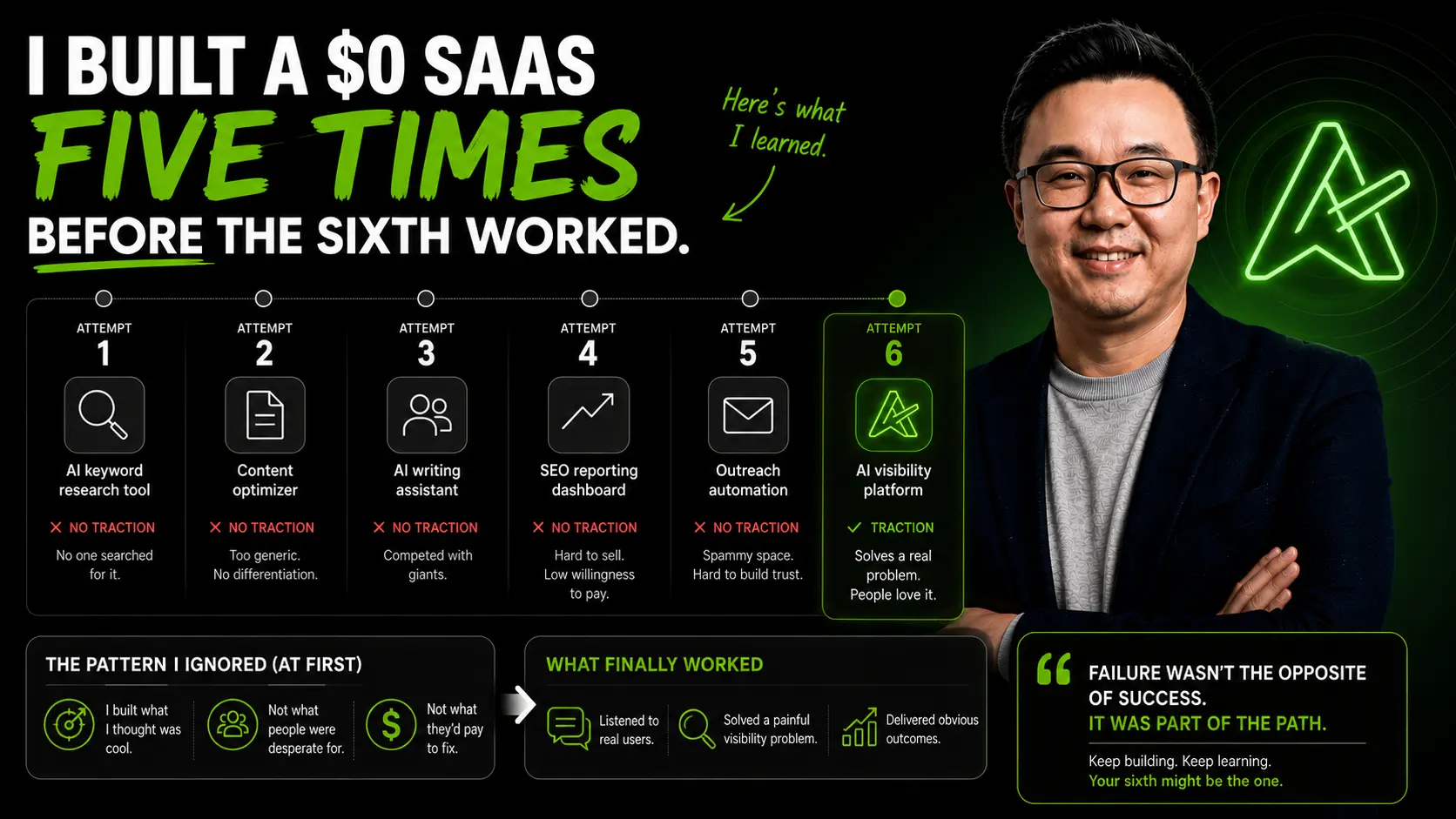
Most startups fail because the product is wrong. Mine failed because the positioning was wrong. The sixth attempt finally fixed that.
Quick answer
I built five SaaS products that almost nobody used. The sixth gained traction after one change. I wrote a single sentence at the top of the homepage that named the category and the buyer. The product did not change. The positioning did. Within two weeks it started showing up in ChatGPT recommendations. The lesson is simple. Most failed products are not broken, they are unclear. If an AI cannot tell what you are and who you serve, it will not recommend you.
The pattern was always the same
For five products, the cycle looked the same:
- I would build a product.
- I would launch it.
- I would wait for the recommendations.
- Nothing would happen.
I would tell myself it was a marketing problem. I would tell myself the product was sound. I would start the next one.
This happened five times.
What was actually wrong
The product was usually fine. The positioning was usually missing.
ChatGPT did not know what category I was in. I had not told it.
I had told it about features. I had told it about benefits. I had not told it about category.
Features without category
My third product was a Chrome extension that auto-formatted text. The homepage led with "make your writing better in seconds." That is a feature claim, not a category. The model could not place it.
Benefits without context
My fourth product was a meeting scheduler. The homepage led with "save four hours a week." That is a benefit claim, not a category. The model could not place it.
Beautiful design without anchors
My fifth product had the best design of the five. It also had the least clear category. The page was beautiful and invisible at the same time.
What changed on the sixth attempt
I wrote one sentence at the top of the homepage. The sentence explicitly named the category and the buyer.
The sentence was: "AudFlo is an AI Visibility Audit Platform for founders building with Bolt, Lovable, and Cursor."
That is it. That was the change.
Within two weeks, the product appeared in ChatGPT recommendations. Nothing else changed:
- Same engineer.
- Same hosting.
- Same backend.
- Different first sentence.
What I would do differently
If I could go back to product one, I would do three things differently.
- Write the category sentence first. Before any code. Before any design. If I cannot write it, I do not have a product.
- Test the sentence with five strangers. If they cannot repeat it back to me, the sentence is wrong.
- Put the sentence at the very top of the page. Not in a subhead. Not below a fold. The very top.
Most positioning problems are first-sentence problems. The good news is that first sentences are easy to fix.
If you want the full method, read the complete AI Visibility Guide for founders.
Key takeaways
- →Most failed products are not broken. They are unclear.
- →Name your category and your buyer in the first sentence.
- →AI engines cannot recommend what they cannot classify.
- →Positioning is a first-sentence problem, and first sentences are easy to fix.
Common questions
FAQ.
Why did the first five products fail?+
What changed on the sixth attempt?+
Could I have fixed the earlier products with the same change?+
Was it really just one sentence that fixed it?+
How do I write a category sentence for my own product?+
Continue reading
More from the blog.
AI Visibility
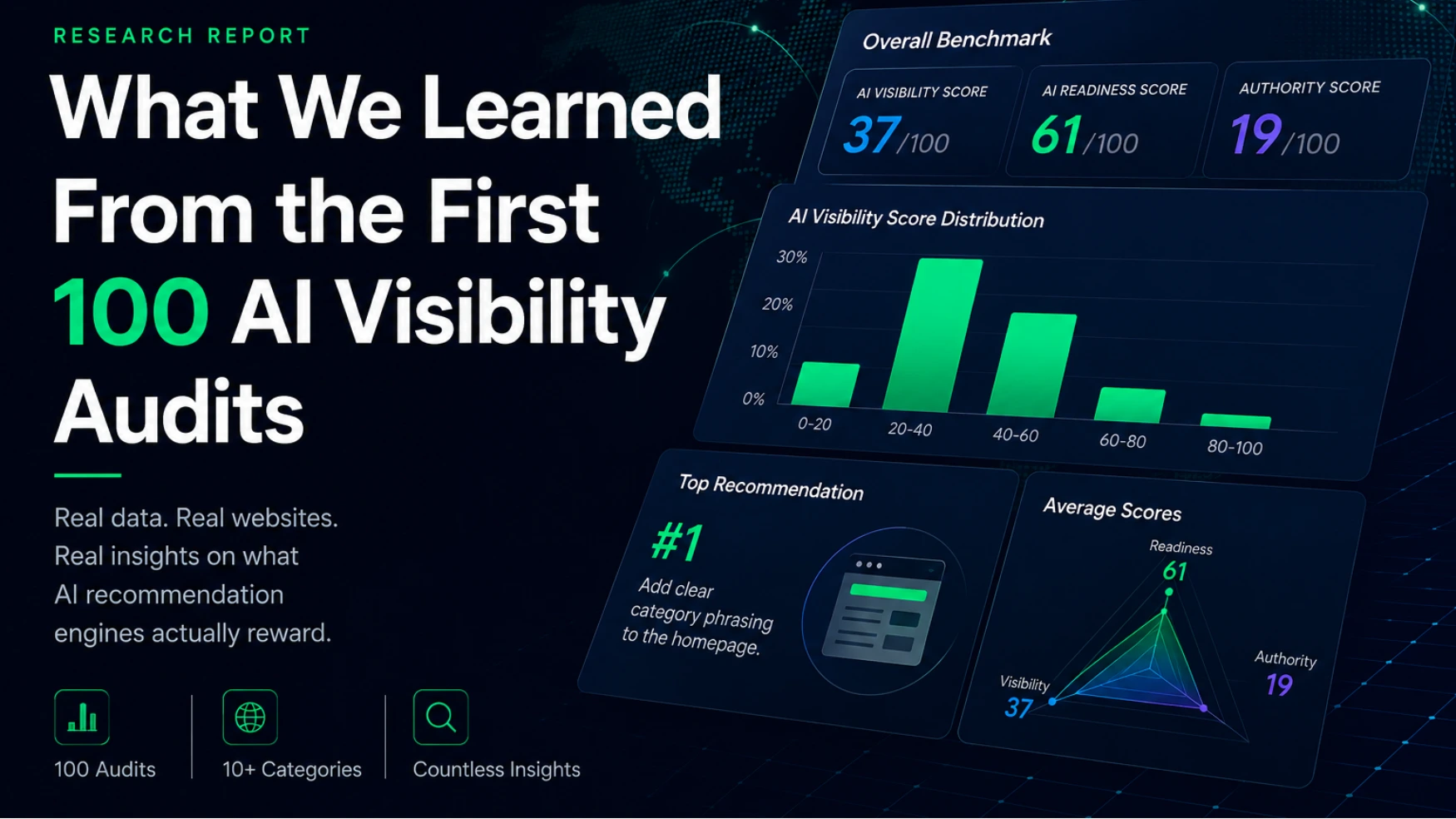
What We Learned From the First 100 AI Visibility Audits
A research note on the patterns that decide whether AI can confidently understand and recommend a company.

AI Visibility
AI Is a New Channel. Like Search and Social, It Is Not Yours.
AI referral traffic is growing fast, but it is rented, the same as search and social. The site you own is the one asset no platform can switch off.
See why AI recommends competitors instead of you.
AudFlo is an AI Visibility Audit Platform. Run a free scan to get your AI Visibility Score and the exact fixes that help you get recommended.
New here? Read the complete AI Visibility Guide for founders or browse every article on the blog.
About the author
Matt Lin
Architect by training. Property developer by profession. Tech entrepreneur by passion.
Founder of AudFlo, an AI Visibility Audit Platform that helps founders understand why ChatGPT recommends competitors instead of them.