
AI Visibility
AI Is a New Channel. Like Search and Social, It Is Not Yours.
AI referral traffic is growing fast, but it is rented, the same as search and social. The site you own is the one asset no platform can switch off.

Search, social, and AI are doors you rent. Your website is the home you own.
Quick answer
AI is a new referral channel that is real and growing fast, with AI referral traffic up around 357% year over year, but it is rented in exactly the way search and social are rented. The platform decides who gets surfaced, by rules it does not publish, and it can change them overnight. The cautionary tale is organic social reach, which fell from about 16% of a page audience in 2012 to 1 to 2% by 2025, after brands had already built their audiences there. Consumers feel the squeeze too: about 80% say it matters that information online stays openly accessible, and 75% worry a few platforms now control what they see. The move for a founder is not to ignore AI or to bet the company on it. It is to chase the new channel while making your own website the home base it sends people to, kept open and machine-readable so any engine can cite it, and trustworthy enough that a rented visit becomes an owned relationship.
The short version
There is a new way audiences find you, and it is growing faster than anything has in years. AI engines now send real traffic to websites, up roughly 357 percent year over year. If you sell anything, you want to be in those answers.
But here is the part founders skip past in the excitement. AI is a channel, not a property. It belongs to whoever runs the model, the same way search belongs to Google and the feed belongs to the platform. You can earn reach there. You cannot own it, and what you cannot own can be changed or taken away without your input.
The move is not to ignore AI, and it is not to pour everything into it. It is to chase the new channel while quietly building the one thing no platform can switch off: your own website, the home base every rented channel should be feeding.
AI is a real new channel
Start with the good news, because it is real. AI search and answer engines have gone from novelty to a measurable source of visits in under two years. For most brands the trend line only points up.
So treat AI as a channel worth earning. The way to do that has not changed much: be the clearest, most citable source on your topic, which is exactly what getting recommended by ChatGPT comes down to. Just keep the size of the bet in proportion. A channel that is growing fast off a small base, and concentrated in a single engine, is an opportunity, not a foundation.
But it is not yours
Every channel that sends you an audience sets its own rules. You are a guest. The terms can change tomorrow, and you will not get a vote.
This is not a complaint about platforms. It is just the arrangement. Search rewards what Google decides to reward this quarter. Social shows your post to whoever the feed feels like reaching. AI cites whoever the model judges worth citing, by criteria it does not publish. All three can move the goalposts, and historically all three have. The mistake is treating any of them as a place you live rather than a road you travel.
The cautionary tale
If you want to know how a rented channel ends, look at what already happened with organic social reach.
Brands spent a decade building followings on social platforms that were, at the time, generous with reach. Then the reach quietly disappeared, and the only way back to the audience they had built was to pay for it. The audience was never theirs. AI is the next version of that same bet, which is why the smart play is to enjoy the reach while it is cheap and make sure it always points home.
People want the open web
There is a tailwind here that founders can use. People are not just passive about platform control. They actively dislike it, and they say so across every age group.
What consumers want is a clear path from a question to a source they can trust, and that path ends on a site someone actually stands behind. This is the same instinct behind why a citation is only half the job: people leave the AI answer to go check the brand directly. A brand that is easy to find, easy to verify, and unmistakably its own is exactly what that growing preference rewards.
The one asset that does not reset
Put the two halves together. AI reach is rented and rising. Owned trust is rare and in demand. The website is where those meet, because it is the one surface you control end to end.
An AI engine reads your site to decide whether to cite you, and a person reads it after the engine sends them, to decide whether to stay. Both of those depend on the page itself, not on the channel that delivered the visit. That is the whole idea behind what AI visibility is: build the owned thing well, and every rented channel works harder for you.
What to do this week
You do not need to abandon any channel. You need to make sure the channels feed something you keep.
Point your campaigns and profiles at pages you own, not at a platform profile that can vanish. Keep those pages open and answer-first so an engine can cite them, the way the 30-second test checks a person can place you fast. Then give every rented visit a reason to become an owned one: an email, an account, a return. When you are ready, run a scan to see where AI places you today and what to fix.
The takeaway
AI is the most exciting new channel founders have had in a long time, and it is rented, exactly like the channels before it. The brands that win the next few years will chase it hard and refuse to depend on it, because they built a home base no algorithm can take away. Use the rented reach. Keep the owned relationship. For the full method, read the complete AI Visibility Guide or see a real sample audit.
- AI referral traffic up 357% YoY; ChatGPT outbound referrals up 206% in 2025 ·Similarweb (2025)
- AI is still only ~1% of total web referrals next to Google ·Digiday (2025)
- Facebook organic page reach fell from ~16% (2012) to 1 to 2% (2025) ·Hootsuite (2025)
- 80% want information openly accessible; 75% worry a few platforms control it ·WordPress VIP Future of the Web (2026)
- AudFlo methodology: the four pillars and 32 checks
Key takeaways
- →AI referral traffic is up about 357% year over year, but still only ~1% of total web referrals.
- →AI is rented like search and social: the platform sets the rules and can change them without notice.
- →The cautionary tale is organic reach, which collapsed from ~16% (2012) to 1 to 2% (2025).
- →About 80% of consumers want an open web, and 75% worry a few platforms control what they see.
- →Your website is the one asset that does not reset when a platform changes its rules.
- →Chase AI as a channel to earn, and convert that rented reach into an owned relationship.
Common questions
FAQ.
Is AI a real referral channel now?+
Why call AI a rented channel?+
What is the risk of building on rented channels?+
What does an owned channel look like for a small brand?+
How do I stay visible in AI without depending on it?+
Continue reading
More from the blog.
AI Visibility
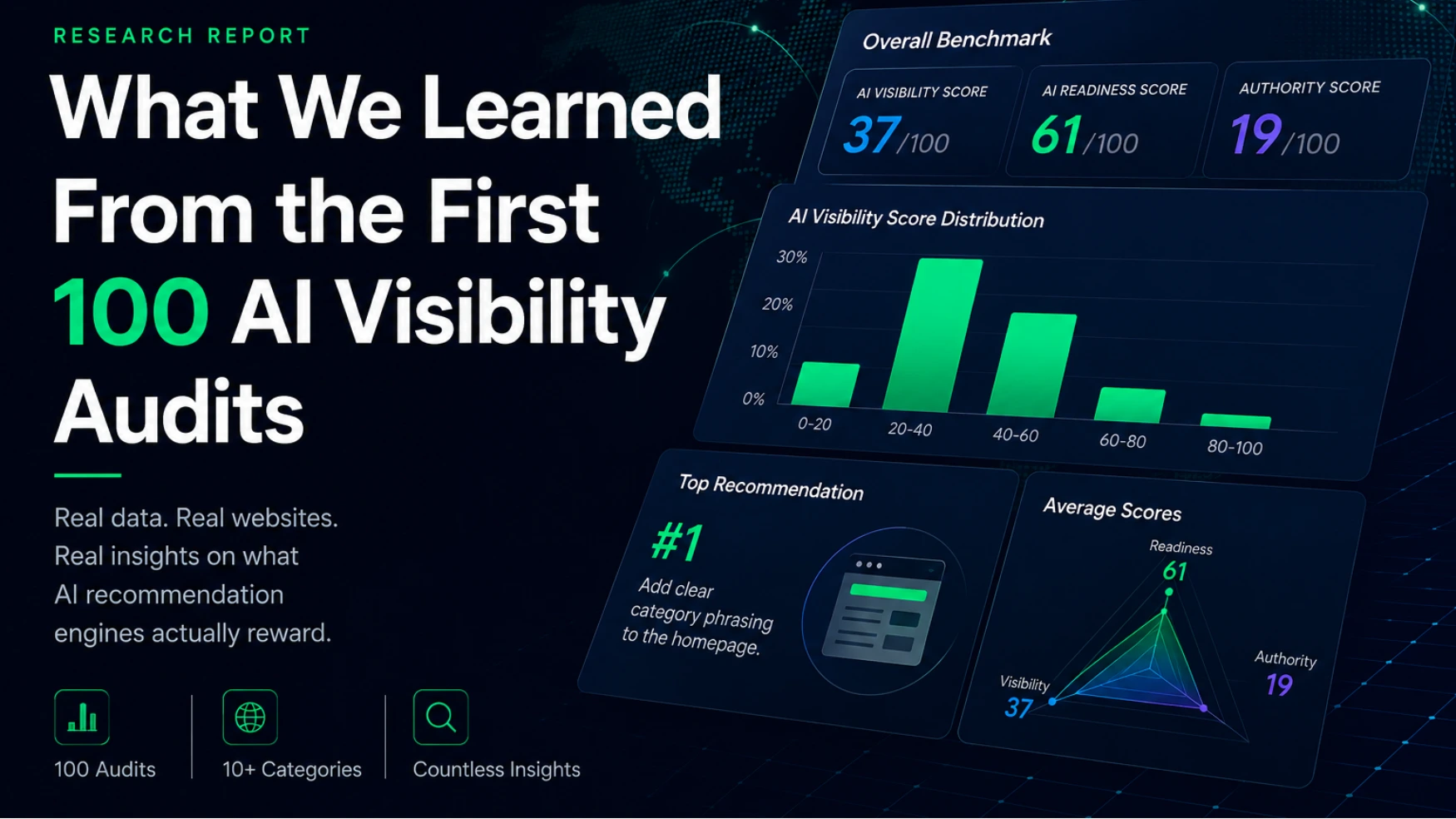
What We Learned From the First 100 AI Visibility Audits
A research note on the patterns that decide whether AI can confidently understand and recommend a company.

AI Visibility
Getting Cited by AI Is Only Half the Job. The Other Half Is Being Trusted.
Brands now spend two days a week chasing AI visibility. But a citation leaks if the buyer cannot trace it back to a brand they trust. Visibility and trust are one job.
See why AI recommends competitors instead of you.
AudFlo is an AI Visibility Audit Platform. Run a free scan to get your AI Visibility Score and the exact fixes that help you get recommended.
New here? Read the complete AI Visibility Guide for founders or browse every article on the blog.
About the author
Matt Lin
Architect by training. Property developer by profession. Tech entrepreneur by passion.
Founder of AudFlo, an AI Visibility Audit Platform that helps founders understand why ChatGPT recommends competitors instead of them.